An Gorta Mór
News of the WorldAn Gorta Mór is invoked by Doris Dillon as an example of how the loss of parents and life among other people can leave children feeling unfinished after they return. Her brief account makes the famine a history of rupture and dislocation, connected to the novel’s image of a self whose first making has come apart.
The Famine and Separation
Doris recalls children who saw their parents die during the famine and then went to live with people on the other side. The account gives no dates or further historical particulars; its focus is the children’s passage from bereavement into a different life. Doris adds that, in their minds, they went: separation is registered as an inward departure as well as a change in where they lived.
Return and Unfinishedness
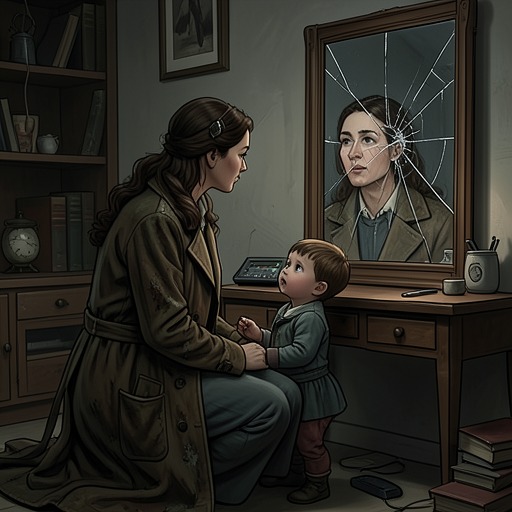
The children came back, but their return did not restore what had been lost. Doris describes them as unfinished and says they are forever falling. The image suggests a self that cannot simply resume its earlier shape: coming back leaves the children caught between the life they left and the life to which they return.
Creation as a Fragile Process
In the surrounding conversation, the question of where the rock of a person’s creation can be found gives Doris’s account its deeper resonance. The famine becomes an instance of what can happen when a second rupture tears at the making of the first self. While Johanna Leonberger carefully eats pieces of bacon, Doris shakes out her wet, pinned-up skirt and watches her; the ordinary scene places the children’s profound dislocation beside an act of attentive observation. Captain Kidd finds the account intriguing, but turns back to his newspapers and the need to earn a living, leaving Doris’s explanation of unfinished children in tension with the absences she sees in the news.